
Table of Contents
- Best Ways to Hang Original Artwork: Planning Your Installation
- Choosing the Right Hardware for Your Wall Type
- Damage-Free Art Hanging Systems for Renters in Sweden
- Art Hanging Systems Sweden: Professional Rail Options
- Hanging Art on Concrete Walls Sweden: Specialized Techniques
- Gallery Wall Ideas Sweden: Creating Cohesive Displays
- Common Mistakes When Hanging Original Artwork
- Hanging Your Original Artwork with Confidence
Last Updated: July 26, 2026
Best Ways to Hang Original Artwork: Planning Your Installation
Proper installation of original artwork transforms a blank wall into a gallery-quality display while protecting your investment. Whether you're working with hand-painted pieces from ART BY ALEXANDRA HOFVE or other original works, the difference between a hastily hung frame and a professionally installed artwork comes down to planning, measurement, and choosing the right hardware for your wall type.
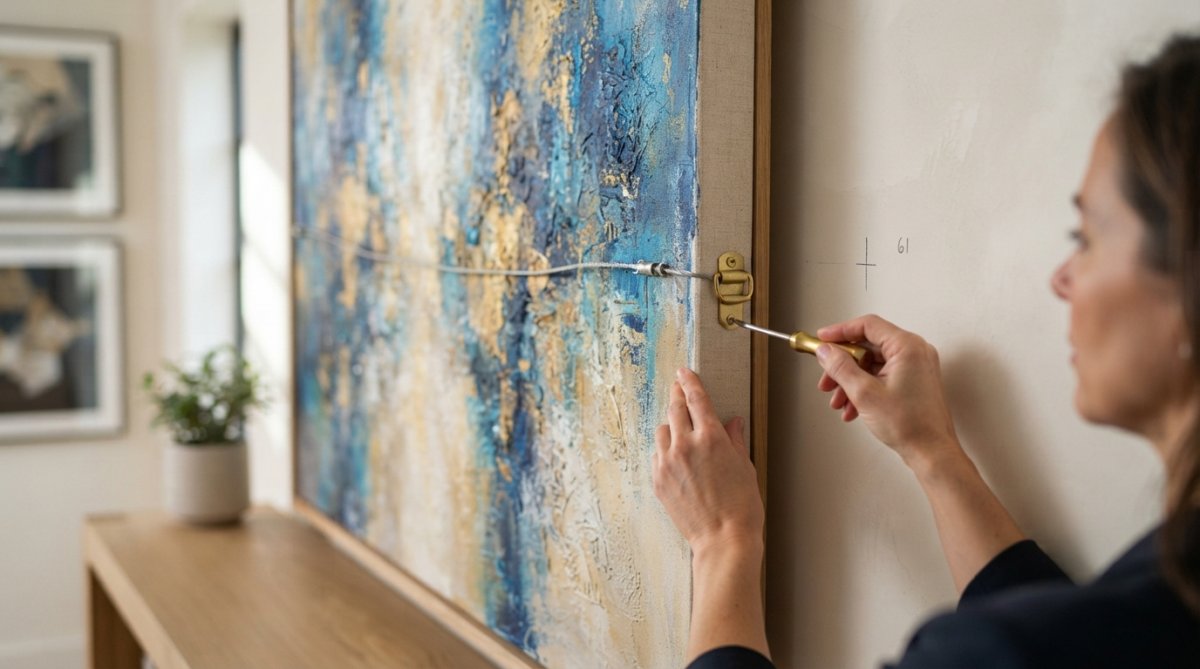
Understanding the 57-Inch Eye-Level Rule
The 57-inch rule is the industry standard for hanging artwork at eye level. Measure 57 inches from the floor to the center of your frame, this places artwork at the natural sightline for most adults. In rooms with cathedral ceilings or where viewers sit for extended periods, adjust downward by 3-6 inches. For artwork above furniture, the midpoint between the top of the furniture and the ceiling often works better than strict adherence to 57 inches. The key is consistency across multiple pieces to create visual cohesion.
Measuring and Marking Your Wall Accurately
Start by finding the center point of where you want your artwork to hang. Use a tape measure to mark the horizontal midpoint of the wall, then measure up 57 inches (or your adjusted height) for vertical placement.
Next, determine where the hanging hardware will sit on the back of your frame by measuring from the top down to the center of your D-rings or picture wire. This distance, called the "drop," tells you exactly where to place your wall anchor or nail. Mark this spot lightly with a pencil and use a spirit level to ensure it's truly horizontal.
Choosing the Right Hardware for Your Wall Type
The wall material determines how your artwork stays secure. Drywall, plaster, concrete, and brick each require different anchoring approaches. Using the wrong hardware for your wall type is the fastest way to watch expensive artwork crash to the floor.
Nails and Anchors for Drywall and Plaster
Standard drywall responds well to picture hooks and wall anchors. For frames under 10 kg, a single quality picture hook driven at a 45-degree angle holds reliably. For heavier frames, toggle bolts provide superior holding power by expanding behind the wall surface, creating a mechanical lock that resists pulling. Fischer DuoPower plugs work across multiple wall types, expanding in solid materials and folding in hollow drywall. At approximately SEK 299 for a 100-piece box, they're cost-effective insurance for valuable artwork.
Plaster walls demand care. Use plaster-specific anchors with wider flanges that distribute pressure across a larger surface area. Pre-drill holes slightly undersized to prevent cracking. If your wall is old plaster over lath, locate the wooden laths and drive screws directly into them, this bypasses the fragile plaster entirely.
Hanging Heavy or Oversized Art Securely
Artwork over 15 kg requires double-fixing, two anchor points instead of one. This distributes weight and prevents tilting or rotation. For very heavy pieces, locate wall studs and drive screws directly into them. Use a stud finder to locate them, then measure carefully to ensure your artwork centers on the wall.
Track&Slide® systems offer professional-grade solutions for heavy artwork. Their Heavy Duty Track supports up to 200 kg, making them suitable for museum-quality installations. The initial setup requires drilling, but the flexibility to adjust artwork position afterward justifies the effort for valuable pieces.
Damage-Free Art Hanging Systems for Renters in Sweden
Renters can create beautiful displays without losing security deposits to wall damage using several effective damage-free options.
Adhesive Strips and Command Solutions
Command Picture Hanging Strips use 3M's stretch-release technology to hold frames securely while removing cleanly without residue. At approximately SEK 129.90 for 12 poster strips, they're affordable and work on painted drywall, finished wood, tile, and metal. Standard strips hold up to 4 kg per pair, sufficient for most framed prints and smaller original artworks. Removal is straightforward: stretch the adhesive tab horizontally and peel slowly.
Tesa Powerstrips Large offer similar functionality with a 2 kg weight capacity per strip at approximately SEK 48 for a 10-pack. The limitation of adhesive solutions is permanence, they're ideal for temporary displays but not for long-term installations of valuable artwork.
Professional Picture Rail and Gallery Systems
Picture rail molding offers a traditional yet effective damage-free solution. The rail mounts to the wall once, then artwork hangs from adjustable hooks on steel or nylon cable, allowing infinite repositioning without additional wall damage.
STAS Picture Hanging Systems represent the premium option. Their patented Dutch design eliminates wall damage entirely while supporting artwork up to their weight limits. STAS rails work on any wall type and allow infinite adjustment after initial installation.
Artiteq Flexible Hanging Solutions offer similar functionality with a focus on professional aesthetics. Their aluminum alloy rails blend seamlessly with contemporary interiors. TÜV certification ensures quality and safety across their component systems.
Art Hanging Systems Sweden: Professional Rail Options
Swedish homes increasingly embrace flexible hanging systems that prioritize both aesthetics and wall protection.
STAS and Artiteq Flexible Hanging Solutions
STAS systems start with a wall-mounted rail that accepts adjustable hooks and cables. The beauty of this approach lies in complete flexibility, you can reposition artwork infinitely without creating new holes. STAS minirail and Cliprail Pro components are available through various Swedish retailers, with pricing ranging from modest for single-rail installations to more substantial for gallery-wall coverage.
Artiteq systems follow similar principles with emphasis on clean, minimalist aesthetics. Their Click Rail Pro and related components integrate seamlessly with Scandinavian interior design sensibilities. The aluminum construction resists corrosion, important in Sweden's varied climate. Both STAS and Artiteq excel at displaying hand-painted original works like those from ART BY ALEXANDRA HOFVE.
IKEA HAGHED and Budget-Friendly Alternatives
The IKEA HAGHED Suspension Rail offers an accessible entry point to flexible hanging systems. At SEK 8 for the 115 cm rail kit, it's remarkably affordable and includes two cords and two adjustable hooks. The maximum load of 4 kg per hook restricts it to lighter frames, and the visible cords are part of the aesthetic.
PHS Picture Rail Hanging Systems, available through Swedish retailers, provide another affordable option. At SEK 751 for a 5-pack gallery set, the kit includes rail hooks, invisible loop cord, and adjustable hooks, working beautifully with existing picture rail molding common in older Swedish homes.
Hanging Art on Concrete Walls Sweden: Specialized Techniques
Concrete walls present unique challenges but provide the most secure hanging surface available once properly anchored.
Using a Masonry Drill and Toggle Bolts
Concrete demands a masonry drill bit with carbide tips. Drill slowly at low speed to prevent the bit from skipping or overheating. After drilling, insert toggle bolts appropriate for your hole size. For artwork over 20 kg, use bolts with a minimum 10mm diameter. The holding power of properly installed toggle bolts in concrete is exceptional.
Fischer DuoPower plugs work in concrete as effectively as in drywall, expanding mechanically behind the concrete surface and adapting to specific concrete density.
Double-Fixing for Maximum Stability
Double-fixing means installing two anchor points instead of one, even for artwork with a single hanging point. This prevents tilting and distributes weight more evenly. Drill two holes at the same height, separated horizontally by 30-50 cm depending on frame width. Use picture wire between the two anchor points, running horizontally across the back of the frame.
Gallery Wall Ideas Sweden: Creating Cohesive Displays
Gallery walls showcase multiple pieces in an intentional arrangement. Most professional galleries use 5-8 cm between frames, enough space to distinguish individual pieces while maintaining visual cohesion. Consistent spacing creates a sense of intentional design.
Composition depends on your aesthetic preference. Symmetrical arrangements feel formal and structured; asymmetrical arrangements feel contemporary and collected. When hanging original artwork like pieces from ART BY ALEXANDRA HOFVE, consider the visual weight of each piece. Distribute visual weight across the entire wall rather than clustering heavy pieces in one area.
Create a paper template before drilling. Tape kraft paper to the wall in the outline of each frame, then mark where hardware will go. This allows you to visualize the final arrangement and adjust spacing before committing to holes.
Hanging Art in Unconventional Spaces
In stairwells, artwork should follow the angle of the stairs rather than remaining horizontal. Alcoves and corners benefit from artwork that fills the vertical space. Avoid hanging valuable original artwork directly above radiators and other heat sources, leave at least 30 cm clearance. Hallways benefit from a single impactful piece that commands attention in a transitional space.
Common Mistakes When Hanging Original Artwork
The most frequent hanging mistakes stem from skipping the planning phase. Always measure twice and mark lightly before making permanent changes. Another common error is underestimating weight, confirm the actual weight before selecting hardware.
Using the wrong hardware for your wall type causes preventable failures. Identify your wall material before purchasing hardware. Hanging artwork too high or too low disrupts visual balance; the 57-inch rule exists because it works across most situations. Finally, neglecting to use a level creates crooked displays that are immediately obvious. A spirit level costs less than SEK 100 and prevents this frustration.
Hanging Your Original Artwork with Confidence
Proper installation protects your artwork investment and creates the visual impact these pieces deserve. The process requires planning, accurate measurement, and selecting appropriate hardware for your specific wall type. Whether you're hanging hand-painted original works from ART BY ALEXANDRA HOFVE or other valuable pieces, these principles work together to create displays that enhance your space and showcase your artwork beautifully for years to come.
Displaying original artwork properly requires more than hanging a frame on a wall. The installation method you choose affects both the artwork's longevity and your wall's condition. ART BY ALEXANDRA HOFVE's hand-painted abstract pieces deserve installation that protects the canvas and frame while showcasing the artist's work at its best.
| Hanging Method | Best For | Wall Damage | Permanence |
|---|---|---|---|
| Command Strips | Renters, temporary displays | None | 6-12 months |
| Picture Hooks | Standard frames under 10kg | Minimal (small holes) | Permanent |
| Toggle Bolts | Heavy frames, drywall | Small holes | Permanent |
| Rail Systems | Flexible displays, frequent changes | Single rail holes only | Permanent |
| Masonry Anchors | Concrete walls, maximum security | Small holes | Permanent |
| Measurement Step | Purpose | Tool Needed |
|---|---|---|
| Find wall center | Horizontal alignment | Tape measure |
| Mark 57 inches | Eye-level positioning | Tape measure, pencil |
| Measure frame drop | Hardware placement | Tape measure |
| Check horizontal | Prevent tilting | Spirit level |
| Verify before drilling | Avoid mistakes | Pencil, painter's tape |
Research from interior design standards for artwork placement confirms that the 57-inch eye-level standard creates optimal visual balance in most residential spaces. Professional installation techniques protect both your walls and your valuable artwork, making the investment in proper hardware and planning worthwhile.
Frequently Asked Questions
What is the best way to hang heavy original artwork without damaging the wall?
For heavy artwork, use toggle bolts or Fischer DuoPower wall plugs rated for the weight. Install double-fixing (two anchor points) for pieces over 5 kg. Always use a stud finder to locate studs when possible, studs provide the strongest hold. For concrete walls in Sweden, a masonry drill with appropriate anchors is essential. Ensure your hardware matches both your wall type and the artwork's weight before installation.
How do I hang artwork without damaging walls as a renter in Sweden?
Damage-free options include Command Picture Hanging Strips (up to 4 lbs per pair), Tesa Powerstrips Large (up to 2 kg per strip), or professional picture rail systems like STAS and Artiteq that mount to walls without permanent damage. For temporary displays, adhesive strips are ideal. For longer-term renting, gallery rail systems allow repositioning without new holes. Always check your lease before installation and test adhesives on inconspicuous areas first.
What hardware should I use for hanging art on plaster walls in Sweden?
Plaster walls require specialized anchors since they're more fragile than drywall. Use plastic wall anchors designed for plaster, or consider picture rail systems that distribute weight across a larger area. Bold Picture Hooks work well on plaster without requiring plugs, just hammer them in. For heavier pieces, Fischer DuoPower plugs specifically rated for plaster provide excellent hold. Always use a spirit level to ensure accurate alignment on plaster surfaces.
How high should I hang original artwork above furniture?
The standard eye-level rule places the center of artwork at 57 inches (145 cm) from the floor. When hanging above furniture, maintain 8-10 inches (20-25 cm) of clearance between the top of the furniture and the bottom of the frame. This spacing creates visual balance and prevents the artwork from appearing cramped. For gallery walls above seating, ensure the lowest piece is still at least 6-8 inches above the furniture to maintain proper composition and visual weight distribution.
This article was written using GrandRanker